The skeletal system, comprising 206 bones, provides crucial support, organ protection, facilitates movement, and acts as a vital mineral reservoir within the body.
Overview of the Human Skeleton
The adult human skeleton is a remarkable framework consisting of 206 individual bones, alongside crucial cartilage, tendons, and ligaments. This intricate system is broadly divided into two main sections: the axial skeleton and the appendicular skeleton.
The axial skeleton forms the central axis of the body, encompassing the skull, vertebral column, and rib cage – providing essential protection for vital organs like the brain and heart. Conversely, the appendicular skeleton includes the upper and lower limbs, enabling movement and interaction with the environment.
Approximately 80% of bone mass is composed of cortical bone, offering strength and density, while trabecular bone, or spongy bone, resides in attachment sites. This complex interplay ensures both structural integrity and flexibility.
Functions of the Skeletal System
The skeletal system performs several critical functions essential for human life. Primarily, it provides a robust structural framework, supporting the body’s tissues and muscles, enabling upright posture and movement. Furthermore, it acts as a protective enclosure for delicate internal organs, safeguarding the brain, heart, and lungs from injury.
Beyond support and protection, the skeletal system facilitates movement by serving as attachment points for muscles. Crucially, bones function as a vital mineral storage reservoir, particularly for calcium and phosphorus, releasing these minerals when needed to maintain bodily functions.
The system also contributes to blood cell production within bone marrow, highlighting its multifaceted role in overall health and homeostasis.

Bone Structure and Types
Bones consist of cortical and trabecular tissue, categorized into long, short, flat, and irregular shapes, each uniquely suited for specific structural and functional roles.
Cortical Bone (Compact Bone)
Cortical bone, also known as compact bone, constitutes approximately 80% of the adult human skeleton’s mass, providing significant structural integrity and resistance to bending and torsion. This dense outer layer of bone is characterized by tightly packed osteons – cylindrical structures containing concentric rings of lamellar bone.
These osteons are arranged parallel to the long axis of the bone, maximizing its strength. Haversian canals within each osteon house blood vessels and nerves, nourishing the bone tissue. The compact nature of cortical bone minimizes porosity, contributing to its hardness and durability. It forms the protective outer shell of most bones and the shafts of long bones, effectively safeguarding internal structures.
Trabecular Bone (Cancellous/Spongy Bone)
Trabecular bone, alternatively called cancellous or spongy bone, is found at the ends of long bones and within the interior of other bones. Unlike its dense counterpart, it exhibits a porous, honeycomb-like structure composed of a network of interconnected rods and plates called trabeculae.
This architecture significantly reduces bone weight while maintaining considerable strength. Spaces between trabeculae are filled with red bone marrow, responsible for hematopoiesis – the production of blood cells. Trabecular bone’s flexibility allows it to absorb shock and distribute stress, crucial in areas prone to high impact. Its structure adapts to mechanical loads, optimizing bone strength where needed.
Long Bones
Long bones, characterized by their greater length than width, are primarily found in the limbs – femurs, tibias, humeri, and radii are prime examples. These bones possess a shaft, known as the diaphysis, composed largely of compact bone, providing strength and rigidity.
At each end, the bone expands into epiphyses, largely comprised of spongy bone covered by a thin layer of compact bone. Epiphyseal plates, growth plates in developing bones, are located between the diaphysis and epiphyses. Long bones facilitate leverage for movement, enabling a wide range of motion. They also contribute significantly to overall body height and proportion.
Short Bones
Short bones are roughly cube-shaped, and their dimensions are approximately equal in length, width, and thickness. These bones are primarily located in the wrists (carpals) and ankles (tarsals). Their primary function isn’t leverage, but rather providing stability and supporting weight-bearing activities.
Composed largely of spongy bone with a thin outer layer of compact bone, short bones offer shock absorption and allow for limited, yet crucial, movements. They facilitate a range of motion in multiple directions, contributing to the flexibility of the wrist and ankle joints. Their structure enables them to withstand compressive forces effectively.
Flat Bones
Flat bones are characterized by their thin, flattened shape, featuring a large surface area relative to their thickness. These bones primarily serve protective functions, forming cranial bones safeguarding the brain, and the ribs protecting vital thoracic organs. They also provide extensive surfaces for muscle attachment.
Structurally, flat bones consist of two parallel layers of compact bone sandwiching a layer of spongy bone, known as diploë. This arrangement offers strength with minimal weight. Beyond protection and muscle attachment, flat bones contribute to hematopoiesis – the production of blood cells – within the bone marrow contained within the spongy bone layer.
Irregular Bones
Irregular bones possess complex shapes that don’t fit neatly into other bone classifications. Their unique forms arise from the specific functions they perform within the body. These bones vary considerably in the amount of compact and spongy bone they contain, reflecting their individual structural demands.
Examples include the vertebrae, which protect the spinal cord and support the body’s weight, and certain facial bones. Irregular bones often feature numerous projections and foramina – openings for nerves and blood vessels – facilitating connections and pathways. They provide attachment points for muscles, ligaments, and tendons, contributing to overall skeletal stability and movement.

Divisions of the Skeletal System
The skeleton divides into axial (skull, vertebral column, rib cage) and appendicular (limbs) components, providing a framework for structure and movement.
Axial Skeleton
The axial skeleton forms the central axis of the body, providing crucial support and protection for vital organs. This division encompasses 80 bones, primarily including the skull, vertebral column, and rib cage.
The skull safeguards the brain, while the vertebral column, composed of individual vertebrae, supports the body’s weight and enables flexible movement.
Protecting the heart and lungs, the rib cage consists of ribs and the sternum.
These interconnected structures work harmoniously to maintain posture, facilitate respiration, and shield delicate internal structures from potential injury, representing the core foundation of skeletal support.
Skull
The skull, a complex bony structure, diligently protects the delicate brain and forms the framework of the face. Composed of 22 bones – cranial and facial – it’s not a single piece but a fusion of plates interconnected by immovable joints called sutures.
These sutures allow for slight movement during birth and contribute to the skull’s overall strength.
Cranial bones enclose and safeguard the brain, while facial bones provide structure for the face, supporting features like the eyes, nose, and mouth.
The skull also features foramina, openings allowing passage for nerves and blood vessels, essential for brain function and sensory input.
Vertebral Column
The vertebral column, or spine, is a flexible, curved structure providing central support for the body and protecting the spinal cord. It’s comprised of 33 vertebrae in early development, eventually reducing to 26 in adulthood through fusion in the sacrum and coccyx.
These vertebrae are categorized into cervical, thoracic, lumbar, sacral, and coccygeal regions.
Intervertebral discs, made of cartilage, cushion the vertebrae and allow for movement and shock absorption.
The spine’s curves – cervical and lumbar lordosis, and thoracic and sacral kyphosis – enhance its strength and flexibility, enabling upright posture and diverse movements.
Rib Cage
The rib cage, a bony and cartilaginous structure, encases and protects vital organs like the heart and lungs. It consists of 12 pairs of ribs, attaching to the vertebral column posteriorly.
The first seven pairs are ‘true ribs’, directly connected to the sternum via costal cartilage. The next three are ‘false ribs’, with indirect sternal connections, and the final two are ‘floating ribs’ lacking sternal attachment.
Costal cartilage allows for rib flexibility during breathing and protects the ribs from damage.
The rib cage facilitates respiration, expanding and contracting with each breath, and contributes to overall torso stability.
Appendicular Skeleton
The appendicular skeleton encompasses the bones of the limbs – both upper and lower – and the girdles that attach them to the axial skeleton. This portion facilitates movement and interaction with the environment.
Upper limbs include the clavicle, scapula, humerus, radius, ulna, carpals, metacarpals, and phalanges, enabling a wide range of arm and hand motions.
Lower limbs comprise the hip bone, femur, patella, tibia, fibula, tarsals, metatarsals, and phalanges, providing support, balance, and locomotion.
These bones, along with associated ligaments and tendons, work in concert to allow for complex and coordinated movements.
Upper Limbs
The upper limbs are responsible for a diverse range of movements, from delicate manipulation to powerful actions. These limbs connect to the axial skeleton via the clavicle and scapula, forming the shoulder girdle.
Key bones include the humerus – the upper arm bone – and the radius and ulna, which comprise the forearm. The wrist consists of eight carpal bones, followed by five metacarpals in the hand.
Finally, the phalanges – fourteen bones in total – form the fingers, enabling precise grasping and tactile sensation. Ligaments and tendons provide stability and facilitate movement at each joint.
Lower Limbs
The lower limbs are engineered for weight-bearing support, stability, and powerful locomotion. They articulate with the axial skeleton through the pelvic girdle, transferring upper body weight to the ground.
The femur, or thigh bone, is the longest and strongest bone in the human body. The patella (kneecap) protects the knee joint, while the tibia and fibula form the lower leg.
The ankle comprises seven tarsal bones, followed by five metatarsals in the foot. Fourteen phalanges constitute the toes, aiding in balance and propulsion. Strong ligaments and tendons ensure joint stability during movement.

Joints and Ligaments

Joints enable movement, while ligaments – tough, fibrous tissues – connect bones, providing stability and limiting excessive motion within the skeletal framework.
Types of Joints
Joints are categorized structurally and functionally, dictating the range and type of motion permitted. Fibrous joints, like sutures in the skull, offer limited or no movement, providing strong connections. Cartilaginous joints, such as those between vertebrae, allow slight movement and act as shock absorbers.
Synovial joints are the most common, characterized by a fluid-filled cavity enabling significant movement. These include hinge joints (elbow, knee), ball-and-socket joints (shoulder, hip), pivot joints (forearm rotation), gliding or planar joints (wrist, ankle), and condyloid joints (wrist). Each type facilitates specific movements essential for diverse bodily functions, supported by ligaments and surrounding muscles.

Nervous System and Bone
Peripheral nerves play a key role in bone development, repair, and remodeling processes, while the sympathetic nervous system establishes a crucial central link.
Role of Peripheral Nerves
Peripheral nerves are intricately involved in the complex processes governing bone development, repair, and continuous remodeling. These nerves aren’t merely conduits for signals; they actively participate in regulating bone cell activity, influencing both osteoblast and osteoclast function. This direct neural influence impacts bone formation and resorption, ensuring skeletal integrity and adaptation.
Furthermore, peripheral nerve damage can significantly disrupt bone homeostasis, leading to complications like osteoporosis or delayed fracture healing. The nerves transmit signals that are essential for maintaining the delicate balance required for healthy bone tissue. Their role extends beyond simple innervation, contributing to the dynamic interplay between the nervous and skeletal systems.
Sympathetic Nervous System Influence
The sympathetic nervous system serves as a key neurological link connecting the central nervous system directly to bone tissues. This connection isn’t simply regulatory; it profoundly influences bone metabolism and remodeling processes. Sympathetic nerve fibers release neurotransmitters that directly affect osteoblast and osteoclast activity, impacting bone density and strength.
Specifically, sympathetic activation can modulate calcium homeostasis within bone, influencing mineral storage and release. This system’s influence extends to fracture healing, where sympathetic signaling plays a crucial role in initiating and coordinating the repair cascade. Understanding this interplay is vital for developing targeted therapies for skeletal disorders and optimizing bone regeneration.

Skeletal System Composition & Weight
The human skeleton, encompassing bones, cartilage, tendons, and ligaments, constitutes approximately 20% of an individual’s total body weight, providing essential structural support.
Percentage of Body Weight
The skeletal system’s contribution to overall body weight is significant, typically accounting for around 20 percent of a person’s total mass. This proportion highlights the substantial role bones play in providing structural integrity and support. While this percentage remains relatively consistent across individuals, variations can occur based on factors like age, sex, and body composition.
In adults, the skeleton’s weight is a considerable component, influencing overall body mechanics and movement. Understanding this percentage is crucial for assessing body composition, evaluating nutritional status, and monitoring skeletal health. It also provides a baseline for comparing skeletal mass across different populations and age groups, aiding in research and clinical applications.
Components: Bones, Cartilage, Tendons, Ligaments
The skeletal system isn’t solely composed of bones; it’s a complex interplay of several crucial components. Bones provide the rigid framework, while cartilage offers cushioning at joints and supports flexible structures like the nose and ears. Tendons are fibrous cords connecting muscles to bones, enabling movement, and ligaments robustly bind bone to bone, stabilizing joints.
These components work synergistically, ensuring both structural integrity and functional mobility. Cartilage reduces friction, tendons transmit force, and ligaments prevent excessive joint movement. The health and proper functioning of each component are vital for overall skeletal system health and maintaining an active lifestyle. Their combined action allows for a wide range of motion and supports the body’s weight.
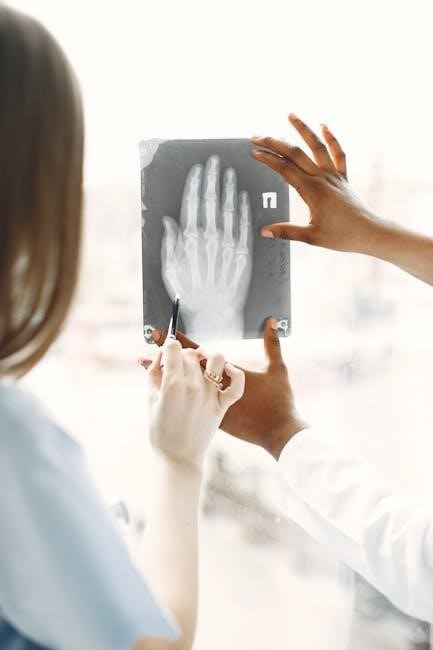
Skeletal System and Mineral Storage
The skeletal system functions as a primary mineral reservoir, notably storing calcium and phosphate essential for various physiological processes and bone health.
Mineral Storage Function
Bones serve as a critical reservoir for essential minerals, primarily calcium and phosphate, constituting a significant portion of their composition. This storage isn’t merely passive; it’s a dynamic process crucial for maintaining mineral homeostasis throughout the body. Calcium, vital for nerve function, muscle contraction, and blood clotting, is constantly deposited into and released from bone tissue based on bodily needs.
Phosphate plays a key role in energy production and nucleic acid structure. The skeletal system’s ability to regulate these mineral levels is paramount, ensuring proper physiological function. Disruptions in mineral storage can lead to conditions like osteoporosis, highlighting the importance of a balanced diet and adequate vitamin D for optimal skeletal health and mineral balance.

Skeletal System Development and Repair
Bone development and remodeling are continuous processes, involving peripheral nerves and the sympathetic nervous system, ensuring adaptation and repair throughout life.
Bone Development
Bone development, a complex process, begins during embryogenesis and continues into adulthood. Initially, much of the embryonic skeleton is composed of cartilage. This cartilage serves as a template for bone formation through a process called endochondral ossification, where cartilage is gradually replaced by bone tissue. Simultaneously, intramembranous ossification directly forms bone from mesenchymal tissue.
Peripheral nerves play a crucial role in regulating this development, influencing cell differentiation and bone matrix deposition. Growth plates, present in long bones during childhood, allow for longitudinal growth. As individuals mature, these plates eventually close, halting further length increases. Throughout life, bone undergoes continuous remodeling, a dynamic process involving bone resorption and formation, ensuring skeletal integrity and adaptation to mechanical stresses.
Bone Remodeling
Bone remodeling is a lifelong process involving the coordinated action of osteoblasts and osteoclasts. Osteoclasts resorb existing bone tissue, creating microscopic cavities, while osteoblasts subsequently deposit new bone matrix, rebuilding the skeletal structure. This dynamic equilibrium ensures bone adapts to mechanical demands and repairs micro-damage.

The sympathetic nervous system significantly influences this process, modulating osteoblast and osteoclast activity. Remodeling maintains calcium homeostasis, releasing minerals into circulation when needed. It also responds to stresses, strengthening bones in areas of high load. Disruptions in remodeling can lead to skeletal disorders, highlighting its importance for overall bone health and structural integrity throughout life.